How to Overcome Grip Strength Failure Before Back Muscle Exhaustion in Heavy Deadlifts
How to Overcome Grip Strength Failure Before Back Muscle Exhaustion in Heavy Deadlifts
Grip strength failure is one of the most prevalent challenges that lifters face while they are completing big deadlifts. There are a lot of athletes who reach a point where their hands give up before their back muscles are completely exhausted, which restricts their ability to build total strength and hypertrophy. This issue often stops lifters from reaching their full capacity in terms of pulling, which in turn reduces both performance and the effectiveness of their training. To address grip restrictions, it is necessary to make modifications to one’s technique, do workouts that include accessories, and make strategic use of appropriate supporting aids. Lifters are able to keep their grasp on the bar for a sufficient amount of time when they concentrate on grip endurance, hand alignment, and forearm engagement. This allows them to completely stress the back muscles and maximize their strength increases. It is possible to have safer and more productive deadlift practices by first gaining an understanding of the mechanics of grip and then putting into practice practical solutions.
Recognizing the Importance of Grip Strength in Deadlifts
The flexors of the forearm, the flexors of the fingers, and the intrinsic hand muscles are the primary variables that govern grip strength. It is necessary for these muscles to maintain their tension during a heavy deadlift, while the back, glutes, and hamstrings are responsible for producing the lifting power. Despite the fact that the posterior chain is able to handle the load, early bar release may occur if the grip endurance is insufficient. There are a number of factors that impact performance, including hand size, bar diameter, callus development, and grip style. Lifting athletes are able to execute focused techniques that avoid premature failure when they are aware of the physiological constraints of their grip capability.
Deciding Which Grip Style Is Best for You
When it comes to retaining control when lifting big objects, grip technique is of the utmost importance. Mixed grips, in which one hand is pronated and the other is supinated, might give extra security, in contrast to conventional overhand grips, which may cause muscles to tire more quickly. Increased bar stability and less strain on the forearms are two benefits that experienced lifters may reap from using hook grips, which require looping the thumb under the fingers. To ensure that grip strength does not become the limiting factor before the back muscles are completely engaged, it is important to choose the right grip depending on the load, personal comfort, and training objectives.
The incorporation of accessory exercises that are specific to grips
It is possible to significantly enhance grip endurance and strength with the use of targeted accessory workouts. It is possible to develop the forearm flexors and hand muscles to sustain extended strain by doing exercises such as farmer’s carry, plate pinches, wrist curls, and towel hangs. Training with these exercises is a great complement to training with the deadlift since they improve the capacity to handle big loads without sacrificing technique. It is vital to maintain consistency in accessory training; even brief sessions with a high frequency may considerably improve grip performance over time, hence minimizing early failure during major lifts.
Appropriately Employing Supportive Instruments
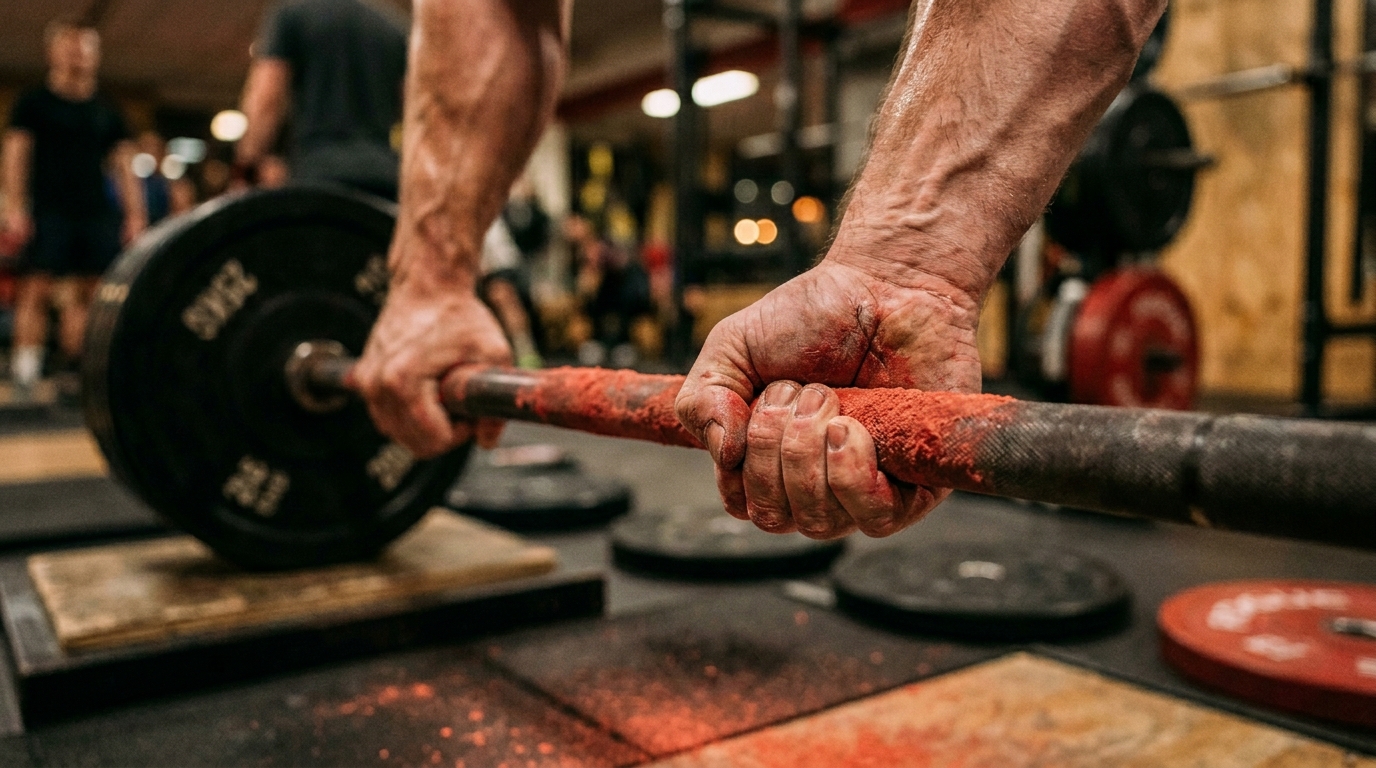
Strengthlifters may temporarily reduce grip problems with the use of supportive equipment like lifting straps or chalk. This enables them to concentrate on developing their posterior chain without experiencing premature hand fatigue. During maximum lifts, chalk may enhance the friction between the hand and the bar, hence minimizing the likelihood of slippage. Straps, on the other hand, can take part of the weight away from the hands. If you want to prevent having an undeveloped grip strength, you should utilize these instruments selectively, despite the fact that they are beneficial. While maintaining functional hand and forearm strength, it is important to include times of raw grasping with tool-assisted workouts.
Maximizing the Effectiveness of Bar Position and Technique
Having the bar in the correct position and using the correct lifting techniques can avoid unneeded grip strain. It is possible to reduce the amount of lateral forces that test grip by keeping the bar near to the shins, maintaining a tight lats engagement, and utilizing a controlled pull pattern during the exercise. Engaging the upper back and core helps to stabilize the bar, which in turn reduces the number of micro-movements that might cause the hands to get fatigued. By paying attention to technique, one may verify that grip failure is not the result of inefficiencies in movement but rather of genuine muscle limits. This enables one to do big lifts in a manner that is both safer and more successful.
Managing the load and volume in a progressive manner
For the purpose of strengthening the grip in conjunction with the posterior chain, it is essential to gradually increase the load and the amount of training. It is possible to cause premature tiredness by jumping to maximum weights too rapidly, which may cause the wrists and forearms to become overloaded. In order to facilitate adaptation without overtaxing the tissues, structured progression, which includes both high-repetition grip endurance exercises and lower-rep maximum lifts, is essential. The utilization of grip-focused exercises at regular intervals protects against injury and chronic strain while ensuring consistent progress.
Considerations Regarding Hand Health and Recuperation
Protecting your grip strength needs paying attention to your recuperation and the condition of your tissues. A sufficient amount of relaxation, adequate hydration, and the treatment of calluses or abrasions are all effective ways to avoid discomfort and enable constant performance. When doing lifts, stretching and mobility exercises for the forearms, wrists, and fingers help to improve circulation and flexibility, which in turn helps to increase endurance. When it comes to heavy deadlift training, making hand health a priority assures that grip will continue to be a dependable asset rather than a potentially restricting concern.
Lifters are able to overcome limits in their grip strength before the back muscles get completely exhausted if they combine strategic grip styles, accessory workouts, technique development, supporting aids, and correct recuperation. This strategy makes it possible to complete heavier deadlifts with more efficiency, to perform them in a safer manner, and to optimize the development of the posterior chain. This technique guarantees constant strength progression and long-term gains.