Programming Point-to-Point Progression Rules for Calisthenics and Bodyweight Skills
Programming Point-to-Point Progression Rules for Calisthenics and Bodyweight Skills
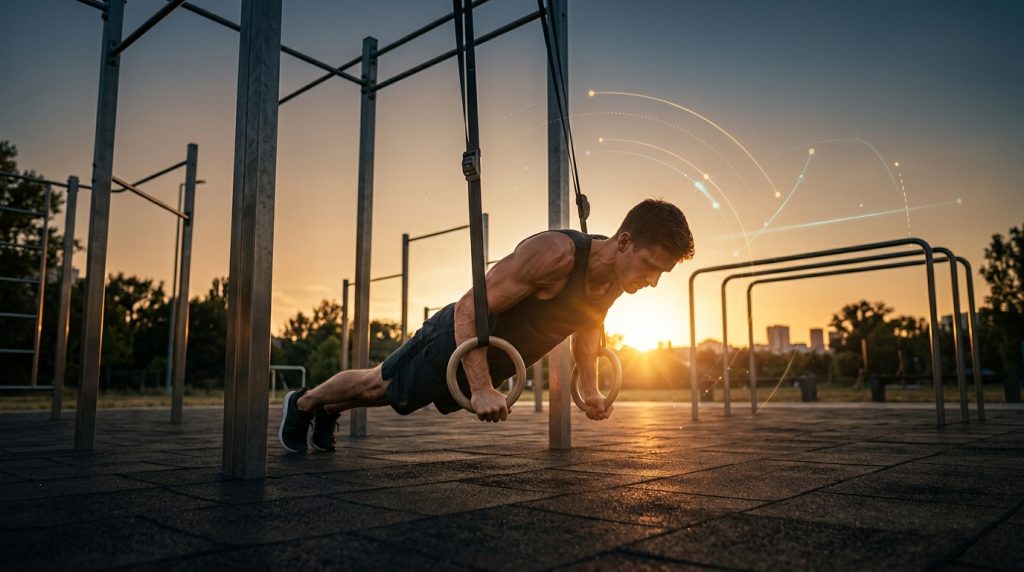
Point to point progression is a systematic way to building calisthenics strength and bodyweight skills. Instead of trying a whole advanced action before you have developed enough control, you connect several positions of the movement together. This technique is especially effective for abilities like pull ups, dips, handstands, front levers, planches and muscle ups, which require a mixture of strength, coordination, mobility and body placement. Instead of just going through a movement because they’ve done a certain number of reps of it, athletes identify key checkpoints in a movement and learn to manage those positions before they connect them together into a full talent. For instance, a front lever learner might first acquire a solid tuck position and then advance to more extended body positions as strength and technique increase. Working progression rules identify measurable standards of success, the right amount of help, goals for repeating the activity, and the criteria for moving to the next variant. They also include tiredness, recuperation and individual variances in body proportions. This technique allows calisthenics athletes to use consistent progression criteria when working toward higher skills, instead of making wasteful tries at moves that are beyond their current capabilities. It also helps to maintain sustainable improvement without the need for guesswork.
Things You Should Know About Calisthenics Point-to-Point Progression
Point to point progression is reducing a difficult bodyweight talent to positions or phases that can be trained individually and then linked together to create the entire movement. Each point is an identifiable technical checkpoint such as keeping a hollow body position, regulating the shoulder blades, obtaining a specified joint angle, or maintaining a solid support position. At each checkpoint, the athlete strengthens and coordinates before moving on to a more difficult version. This is different than just adding more reps, because the emphasis is on improving control of the movement pattern, not just accumulating volume. For example, an athlete striving toward a rigorous muscle-up may need to build a powerful pull-up, a high pulling position, a controlled transition and steady stability above the bar. These modules can be trained independently and then plugged into the complete skill. Progression from point to point also helps with static holds, where the measure of performance is the ability to hold a particular shape against gravity. There should be a specific goal for each stage, with a measurable criteria so that progress can be measured objectively. This strategy does not eliminate the need to practice full movements, but it makes complex talents manageable by pinpointing the skills needed at each stage.
Define Technical Preconditions Before Training
A good progression plan starts with finding the technical check points that indicate whether a bodyweight skill can be executed safely and consistently. These milestones should be about observable positions, not nebulous suggestions like becoming stronger or improve your control. For a handstand, good points can be a secure overhead shoulder position, controlled entry, balanced alignment and the capacity to retain the position without over-arching. In a front lever, checkpoints could be scapular control, trunk stiffness, hip posture and holding the ideal body form during the hold. Dynamic skills are about knowing where you start, where you finish, and how you go from start to finish. For instance, someone learning a dip should show control on the descent, have stable shoulders, and end with a consistent press before adding excessive range or difficulty. Write down the technical requirements for each step and apply the same standards to the next sessions. Video recordings can be useful in detection of changes in the body position that are difficult to observe while executing the movement. Checkpoints should be skill specific and based on the athlete’s abilities at that time. Don’t save so many checkpoints that it complicates training needlessly. In general, a small number of well-selected criteria are more useful than a complex system that is difficult to implement in a consistent manner.
Choosing Right Starting Variations and Levels of Help
The first variation should allow the athlete to drill the desired movement pattern without frequently failing to maintain control. Beginners could need a lot of help or less leverage, while experienced calisthenics athletes might be ready for more challenging versions and less support. For example, someone aiming to do a pull-up might begin with aided pull-ups, controlled inverted rows, or eccentric repetitions, depending on their existing strength and how their shoulders tolerate the exercise. An athlete learning the front lever can begin with tuck version that shortens the effective lever arm and allows the trunk and shoulder muscles to hold a stable stance. Assistance bands, adjustable foot support, resistance devices and help from a partner can make challenging motions easier when used in the right way. However, aid should not mask significant technical difficulties or provide a movement pattern that is markedly different from the goal skill. Choose the lowest level of support that produces consistent performance, and then slowly decrease the assistance as control grows. Body position can also be changed to alter leverage, such as by switching from a tucked position to a one-leg or more extended variant. These adjustments should be made one at a time, so that the impact on difficulty may be observed. Starting with a version you can actually do sets you up to go on to more advanced skills and you’ll be less likely to become frustrated trying to practice something that’s way too hard for you over and over.
Setting Objective Criteria for Stage Transitions
Progression guidelines should also show what effective performance looks like before an athlete progresses to the next more difficult variation. Without defined standards, growth can be erratic, with athletes advancing after a single extraordinarily strong try or staying at an easy level long after they have mastered it. A practical guideline may be to do three sets with a defined number of controlled reps while retaining the intended technique. For static skills the athlete may be required to hold a number of positions for a defined time without loss of body alignment or pain. A front-lever progression may demand for three technically consistent holds of eight to twelve seconds before increasing the lever length. The specific aim would depend on the athlete’s expertise and the demands of the talent, not a one-size-fits-all standard. Dynamic movements may demand both repetition quality and range-of-motion consistency, whereas balance abilities may require consistent control across numerous trials. Progression should also take into account the amount of work the stage asks for. If each set is done at near maximal exertion the athlete might not be ready to up the difficulty even after the repetitions goal has been met. Repeatable criteria facilitate the tracking of development and minimize unwarranted fluctuation from training session to training session.
Controlling Leverage, Range of Motion, and Movement Complexity
Leverage is one of the most critical variables in bodyweight training, since the position of the limbs modifies the mechanical demands on muscles and joints. When you do a front lever, straightening your legs increases the distance between your center of mass and your shoulder joints, and this usually increases the torque your upper body has to resist. A tucked version shortens that lever and lets the athlete build the requisite strength before moving on to longer body positions. Similar ideas are valid for planche training, extending the shoulders further forward in relation to the hands increases the load on the wrists, shoulders and trunk . Gradual progression is also possible with range of motion. A partly regulated range is good for an athlete not yet ready for a full plunge, with this range increasing as strength, mobility and tolerance develop. Another aspect is movement complexity, especially with handstands and dynamic transitions that involve timing as well as strength. Do not increase leverage, range and movement speed concurrently as the combined change may be more than the athlete can currently manage. Instead, vary one big variable at a time and see if technique remains steady. This technique preserves a certain relationship between the progression stage and the physical requirements it makes to the body.
Sets, Holds, Repetitions, and Rest Intervals Programming
The programming of calisthenics should be based on the main factor the skill depends on, i.e. maximal strength, control in static positions, muscular endurance or coordination. Advanced strength skills such as planches and front levers are often best trained with brief, high-quality attempts . Fatigue can greatly decrease body-position control . Athletes may start with three to five sets of short holds, adjusting the length of the holds based on the difficulty of the progression and the ability to maintain proper form. Dynamic strength exercises can be performed with multiple sets of low to moderate reps, providing each rep is performed in the desired movement pattern. Rest periods should be long enough to restore useful performance. For tough static holds and strength-based reps, a good starting point is two to four minutes, although you could need extra recovery for truly hard skills. Less challenging drills may consume less time. Do not let the hips drop, the elbows bend inadvertently, or the desired body shape change to avoid prolonging the hold time. If the goal is to improve a particular technical checkpoint, do not add repetitions because the session is seeming easy. Track the quality of each set, the time or reps you completed, the assistance you utilized and the perceived effort. These records are used to evaluate whether the following session should stay at the current stage, raise the workload a little, or decrease the complexity.
Integrating Partial Skill Practice into Whole Movements
Point-to-point training is most effective when the separate checkpoints are finally linked through practice of the whole skill. Isolated holds and partial repetitions may improve specific strength or coordination, but may not fully prepare an athlete for timing and transitions throughout a continuous activity. For example, a muscle-up athlete could perform high pull-ups, controlled transition drills and support holds before attempting assisted or full muscle-ups. Each drill develops a part of the skill. In full-movement practice, the athlete learns to synchronize those parts in a realistic situation. Handstand training may also include wall-supported alignment practice, controlled entry, balance adjustments and short freestanding attempts. The amount of partial vs. full practice depends on the skill level of the athlete and the complexity of the movement. Beginners may need more time on basic positions, while expert athletes might benefit from regular full efforts with specific drills. If the athlete does not have a reasonable control of the positions, do not try to do the whole skill over and over again. Too many efforts at failure might lead to tiredness without sufficient high-quality practice. Use partial workouts to address the limits you can identify, and then regularly examine the whole movement to see if the gains you’ve made carry over to real performance.
Track Fatigue & Recovery and Technical Fall-back
Bodyweight skills can be taxing even when the external force is limited to bodyweight . Difficult leverage positions exert enormous stress on the shoulder , elbow , wrist and trunk . Shorter holds, lower pulling height, lack of hollow-body stance, inconsistent shoulder control, or inability to replicate previously reliable technique could all evidence fatigue. When these changes happen, first look at whether the athlete is doing too much training volume, not enough rest, or too many hard tries in a single session. Static strength skills frequently need high levels of focus therefore frequent peak efforts may decrease quality of later practice. A good tip is to halt a set when you can’t hold the position anymore instead of going to the point of utter breakdown. Successful holds, quality of repetitions, assistance levels and any joint discomfort should be noted on training logs. If the performance dips over a few sessions, then temporarily cut back on the amount of sets, or revert to a more manageable progression. This is not necessarily a loss of progress, but may be the recovery needed to consolidate the skill. Pain should not be seen as a common symptom of technological difficulty. Stop or modify any activities that cause sharp or increasing pain . Get professional help if pain persists . Sustainable progression is based on adaptation of training demands to the current capabilities of the athlete rather than imposition of development on a fixed timetable.
Designing a Long-Term Bodyweight Skills Progression System
A durable point-to-point progression system includes defined milestones, suitable initial variations, objective progression criteria and regular review. Start with one or two priority abilities that match your training goals, then define the positions and movement qualities necessary to perform them. Set an appropriate initial level and state the technical criteria which must be met before increasing the complexity. Log hold times, repetitions, amounts of assistance, and quality of movement so you can develop on repeatable performance rather than motivation. Progress slowly . Increase leverage, range of motion or complexity of movement. Don’t change numerous factors at a once! Include full skill practice as appropriate so that improvements in specific positions carry over to the targeted movement. Schedule hard abilities early in the session when coordination and strength are relatively fresh and balance them against other exercises that load the same joints and muscle groups. Instead than searching for a new feat each session, look at improvement over a number of weeks. Some abilities are learned rapidly, others take long-term practice and careful control of joint tolerance. When a progression breaks down repeatedly, return to the previous level that can be accomplished reliably and find the limiting cause. Calisthenics athletes can utilize defined, measurable progression rules for more systematic strength and coordination development, eliminate wasteful failed attempts, and advance to more advanced bodyweight abilities with improved consistency and control.