How to Assess and Adjust Barbell Path Deviations During Maximal Deadlift Attempts
How to Assess and Adjust Barbell Path Deviations During Maximal Deadlift Attempts
Changes in barbell route during maximal deadlift efforts can lower lifting efficiency, throw off balance, and make it more difficult to finish a heavy repetition with consistent technique. If the weight is near a lifter’s max, even tiny variations in bar path can increase stress on the hips, knees, lower back, and upper back. If a bar is drifting forward from the body or swinging around the knees or moving unevenly between the floor and lockout, it may be a sign of issues with setup, force production, or coordination. However, not all deviations are technical errors, as individual limb proportions, stance width, grip choice and deadlift style influence the most effective bar route. Watching the bar travel in a perfectly straight line tells us more is required to assess these elements. Lifters need to watch the horizontal displacement of the bar, its relation to the midfoot, the time around the knees, and consistency from rep to rep. Video analysis, controlled warm-up sets and systematic changes might help to uncover the causes of inefficient movement before attempting maximal loads. Training to recognize bar path errors and implement specific corrections enables strength athletes to improve deadlift technique, avoid extraneous fatigue, and approach large lifts with increased technical reliability.
How To Identify A Good Deadlift Bar Path
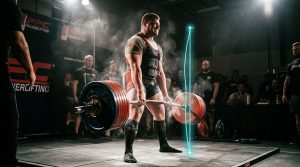
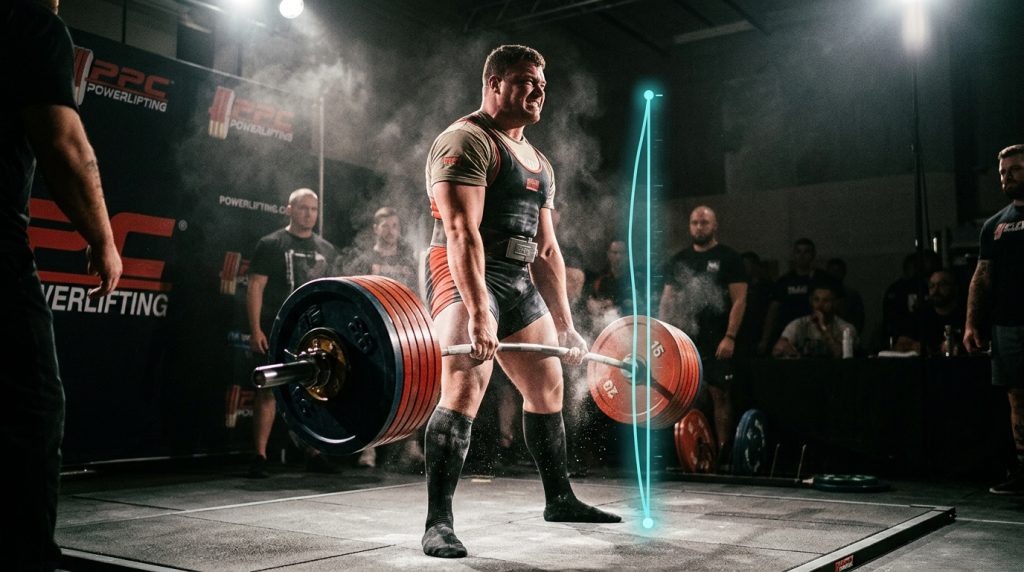
A good deadlift is one where the bar travels vertically or on a route with as little horizontal deviation as possible, and the lifter stays balanced over the feet. In the starting position the bar is generally above the midfoot, allowing the lifter to establish a solid relationship between the load and the center of mass of the body. As the lift begins the bar should stay close to the legs, not out in front into open space. This closeness assists in controlling the external moment arm around the hips and lower back, although the exact mechanics depend on the lifter’s build and technique. During the first pull, the knees are moved out of the way of the bar in a coordinated sequence with the hips and shoulders rising. The bar goes up the legs, over the knees, until the hips are moving into lockout. There can be a little lateral shift, naturally, especially if the initial position or body proportions demand it. The goal here is not to compel every lifter into the same bar route, but to avoid needless displacement that adds effort without adding to effective completion. Understanding this idea provides a useful point of reference for lifters to evaluate their own technique when using bigger loads.
Recognizing Common Barpath Mistakes
There are several recurring bar path deviations that can signal that a deadlift setup or execution correction is needed. A classic problem is that the bar travels forward as soon as it leaves the floor, increasing the horizontal distance between the load and the hips. This can put a disproportionate load on the lower back and might need the lifter to adjust by dragging the bar backward later in the rep. Another variation is when the bar swings around the knees instead of a close, controlled course along the legs. This pattern can be the result of insufficient knee clearance, irregular hip position or trying to move the knees out of the way of the bar too late. Another problem with uneven movement is when one side of the bar moves up faster than the other side . This could be due to asymmetrical setup , variances in grip , changes in posture , or personal restrictions in movement . A rapid backward shift at lockout can be a sign that the lifter is employing too much lean-back instead of ending with controlled hip extension. You should look at the patterns throughout multiple repeats rather than assume from one challenging try. The most useful observation is the deviation which is regularly observed under similar loading situations.
Assessing Bar Movement Through Video Analysis
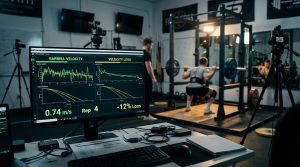
Video analysis is a useful method to evaluate aberrations of the barbell path that may be difficult to identify during a maximal deadlift. Film warm-ups and progressively heavier efforts from a continuous side angle, with the camera far enough away to see the full bar, plates, feet and upper body. To minimize perspective distortion, the lens must remain almost perpendicular to the plane of movement of the lifter. When studying unequal bar elevation, asymmetrical stance or discrepancies in knee and hip placement, a front or rear view can be incorporated. Go through the tape in sections – set up to when the plates leave the floor, the first few cm of the pull, the transition around the knees and the final lockout. Look for variations in the horizontal position of the bar in relation to the midfoot, the bar-to-legs distance, and the timing of hip and shoulder movement. The comparison of these measurements for multiple loads might show if a variation is present only near maximal intensity or continues throughout the session. Be careful with slow motion footage, as regular movement might look more problematic when intentionally stretched out. Repeatable recording conditions and consistent placement of the camera contribute to making comparisons more accurate.
Correcting Forward Bar Drift on the First Pull
The forward bar usually starts to drift on the first draw before it leaves the floor. The bar may be too far from the midfoot, the hips may be too low or high for the lifter’s mechanics or the shoulders and lats may not be working together correctly at setup. To get around this problem, set the bar position first, usually somewhere in the middle of the foot. Get into position without shuffling the feet back and forth after grabbing the bar. Bend down and grasp, move your shins toward the bar without pushing it forward, and build tension in your upper back before you start the pull. “Using the lats will help hold the bar close to the body, and a controlled bracing will aid with trunk stiffness as force is applied.” Don’t jerk the bar off the floor. An explosive pull can cause the load to go forward before the body has had a chance to build tension. Light technique reps and paused deadlifts just off the floor can aid to strengthen control during this part. However, these variations should be with reasonable weights and consistent placement. If forward drift occurs exclusively during maximal efforts, the lifter may also need to reevaluate attempt selection, as a load that exceeds present technical capacity can reveal deviations that are less apparent during lighter sets.
How to Handle the Bar’s Movement Around Your Knees
A frequent area where deadlift bar routes might become inefficient is around the knees. As the lifter begins to pull, the bar may go forward to get around the knees, and then move backward toward the thighs, if the knees remain in the direct line of the bar. This causes unwanted horizontal movement and may interfere with the transfer of force from the floor to the lockout. A better method is to start in a posture where the knees and hips will let the bar come up close to the body. On the first pull as the bar rises the knees should go back, generating room without having to transfer the load forward. As the hips and knees stretch the torso angle changes, but the movement should be synchronized, not letting the hips rocket up while the shoulders stay virtually immobile. If the bar swings around the knees many times, film the first half of the lift and compare the position of the knees to the horizontal movement of the bar. Depending on the problem, you can develop positional awareness through paused deadlifts below the knees, block pulls at a reasonable height, and controlled Romanian deadlifts. These exercises are not magic bullets, so choose them according to the variance you see and keep the training load modest while perfecting technique.
Hip position, bracing and lat engagement tweaks
Heavy deadlifts hinge on hip placement, trunk bracing, and lat engagement working in concert with a consistent bar path. If the hips are too low they will rise before the bar, affecting the beginning position and allowing the bar to wander away from the body. High hips might cause problems if they interfere with the lifter’s ability to use an effective leg drive or to hold a stable trunk position. The ideal hip height varies on such things as femur length, torso length, ankle mobility, posture, and whether the lifter is doing a standard or sumo deadlift. Don’t duplicate another lifter’s setup. Find a position where your arms hang naturally, your grip is solid, your trunk is braced and the bar can begin to move without a substantial repositioning of the hips. Pulling the trunk creates circumferential abdominal strain before each repetition. Pull the lats to keep the bar in control relative to the legs. The signal to maintain the bar near is a good one, but pulling back aggressively can throw off your balance or get in the natural course of motion. During submaximal work, practice consistently so that the same positions may be recreated as loads become challenging.
Differentiating Technical Errors From Load-Related Deviations
Not every bar path modification demands a thorough revision of technique. When a deadlift is at the limits for a lifter , the bar speed will generally slow and the body will take slightly altered positions to continue to provide force . Any other horizontal movement may be due to an individual’s anatomy or style of deadlift and not an error that can be corrected. The main difference is if a deviation consistently diminishes efficiency, disrupts balance or is accompanied by a loss of control. Check the footage from light, moderate and heavy sets with similar setup conditions. If the bar stays near the body in warm ups but then shoots dramatically forward only at near maximal loads, the lifter may need to enhance strength at the sticking point, improve attempt selection, or reduce tiredness before testing again. If you observe the same variation at lighter loads then setup and movement coordination are more likely areas to investigate. Do not make multiple modifications at the same time, because it is hard to know which change is improving the situation. Vary one element at a time, for instance, foot placement, hip height, or the timing of lat engagement, and examine the outcome after a few sets. Maximal attempts should be kept for suitable testing circumstances and not used repeatedly as a diagnostic tool when technique is worsening.
Programming Technical Correction Prior to Maximum Attempts
The best technique to fix deviations from the deadlift bar path is to drill the right movement pattern before attempting maximal loads again. Technical work can be introduced into the training week with submaximal deadlifts, halted reps, controlled tempo variations, or other exercises designed for the particular challenge. For example, if a lifter loses bar proximity in the first pull, they may do paused deadlifts a few inches off the floor with a weight that allows for a strong steady brace and stance. If someone frequently loses control at the knees, lighter repetitions focusing on synchronized knee clearance and a tight bar path could be helpful. Ensure the total effort is appropriate for the lifter’s ability to recover, especially when adding corrective training to an established strength program. Keep a training log of the load, reps, perceived exertion and the technical problem being worked on. Instead of filming every repetition and making adjustments as you go, video a handful of example sets. If the technique starts to break down, either terminate the set or drop the weight, do not just throw in a bunch of bad reps. Warm up gradually, check the speed and location of the bar and select a load that is appropriate to your preparedness and recent performance before attempting a maximal lift. This way technical gains become recurring habits, not transitory modifications that disappear under the first demand.
Keeping a Consistent Bar Path in the Big Lifts
Proper setup, proper bracing, sufficient strength, and solid loading selections all lead to good deadlift technique. Before each heavy attempt, employ the same pre-lift sequence that gets the bar in position, sets the grip, braces the trunk, activates the lats and creates tension before the plates come off the floor. As you pull, make sure the bar stays tight to your legs, clears your knees without swinging, and you lockout through controlled hip and knee extension. Use video analysis and submaximal exercise to recognize patterns of deviations, but do not anticipate every successful repetition to follow a precise identical path. The goal is to establish an efficient, consistent movement pattern that fits the lifter’s body and the form of deadlift they choose. If a maximum load attempt results in a significant loss of balance, an unanticipated asymmetry or uncontrolled movement, do not instantly repair it by testing the same load repeatedly. Go lighter, re-test the cause, and then go back to harder tries when your technique is a little more reliable. Persistent pain, abrupt weakness, or recurring issues demand appropriate expert assessment, not just adjusting bar path cues. Through systematic observation, targeted practice and rational development, lifters can increase their deadlift efficiency and approach maximal attempts with greater control and confidence.