Isolating the Psoas Muscle: Floor Stretches to Counteract 8-Hour Sitting Compression
Isolating the Psoas Muscle: Floor Stretches to Counteract 8-Hour Sitting Compression
People’s modern lives often demand them to sit for extended periods of time, whether it be at their jobs, in their automobiles, or in front of screens. It is common knowledge that sitting for long periods of time can cause back pain and poor posture. However, the psoas muscle is one of the structures that is most often overlooked when it comes to the effects of sitting for extended periods of time. In addition to its involvement in movement, posture, and balance, the deep hip flexor is also important for maintaining spinal stability. As a result of sitting for eight hours or more on a daily basis, the psoas muscle stays in a shortened posture for extended periods of time. This may lead to stiffness, reduced mobility, and soreness across the lower back and hips. It is possible to restore mobility, enhance posture, and lessen the physical strain that is associated with sedentary habits by gaining an understanding of how sitting affects this essential muscle and by performing specific floor stretches.
Recognizing the Role of the Psoas Muscle in Relation to Function
Although it is one of the most important muscles in the body, the psoas muscle is one of the least known muscles. Prior to its attachment to the upper femur, it begins its journey in the lower spine and continues through the pelvis. This one-of-a-kind location enables it to link the upper and lower bodies while also contributing to hip flexion, walking mechanics, maintaining posture, and providing support for the spine. A person’s psoas muscles become engaged whenever they perform a movement such as lifting their knee, climbing stairs, or moving from a seated to a standing position. The tension in this muscle is often overlooked until it starts to damage the structures that are placed in the surrounding area. This is because the muscle is located deep inside the body. It is crucial to maintain good psoas function in order to achieve efficient mobility and general musculoskeletal health.
The Psoas Muscle Contractions Caused by Prolonged Sitting
This causes the psoas muscle to be in a shortened position because the hips stay contracted for lengthy periods of time while sitting. Sitting for an extended period of time restricts the range of motion of the muscle, in contrast to dynamic action, which routinely lengthens and contracts the muscle. It is possible that the muscle may eventually adapt to this shorter condition, which will result in decreased flexibility and greater tension of the muscle. This adaptation has the potential to affect the alignment of the pelvis and to change the normal movement patterns. There is a possibility that the body may start exerting extra tension across the lower back, hips, and thighs by compensating via other muscles and joints. There is a correlation between the length of time that people spend sitting each day and the possibility that they may acquire limits connected to their psoas.
Indicators of Psoas Tightness and Inability to Move Around Normal
Psoas tightness may present itself in a variety of ways, the majority of which are more often than not ascribed to factors that are unrelated to the condition. while individuals have been sitting for an extended period of time, they may suffer stiffness while standing, soreness in the front of the hips, a reduction in the length of their stride when walking, or chronic lower back strain. A number of individuals have difficulties in keeping an upright posture, while others experience a sense of restriction while engaging in activities that require hip extension. Because of the progressive nature of the development of these symptoms, it is common to ignore them until they become noticeable in terms of mobility. In order to address the problem before compensatory movement patterns become firmly established, it is helpful for people to recognize these warning indicators.
Why Stretches Performed on the Floor Are So Effective
Stretches performed on the floor provide a steady environment that enables the body to relax while simultaneously applying pressure on deep muscle areas. Floor-based motions allow people to concentrate on correct stance and regulated breathing, in contrast to standing stretches, which involve balance and cooperation between the person and the floor. This laid-back atmosphere has the potential to promote increased muscle release and higher degree of flexibility. Stretching that is particularly strenuous is not often required since the psoas muscle is located deep inside the body. In many cases, postures that are gentle and maintained are more helpful in stimulating lengthening while also limiting tension that is not essential. Exercises performed on the floor alleviate strain on the joints, making them suitable for people with varied degrees of mobility and fitness despite their accessibility.
The stretch for the hip extension while supine
Laying down on your back and getting close to the edge of a comfortable surface is the first step in doing an efficient floor stretch. While one knee is brought in toward the chest in a gentle manner, the other leg is left in its stretched position. This posture facilitates lengthening across the front of the hip on the extended side, which is where the psoas muscle is situated. In addition to assisting in the reduction of muscle guarding, maintaining moderate and relaxed breathing enables the stretch to gradually deepen. Instead of putting an emphasis on intensity, the focus should stay on comfort. Individuals who are suffering hip tightness as a result of sitting might benefit from beginning with this posture since it enables the tissues to gradually adjust to the position over a modest period of time.
Variation of the Low Lunge Floor Position
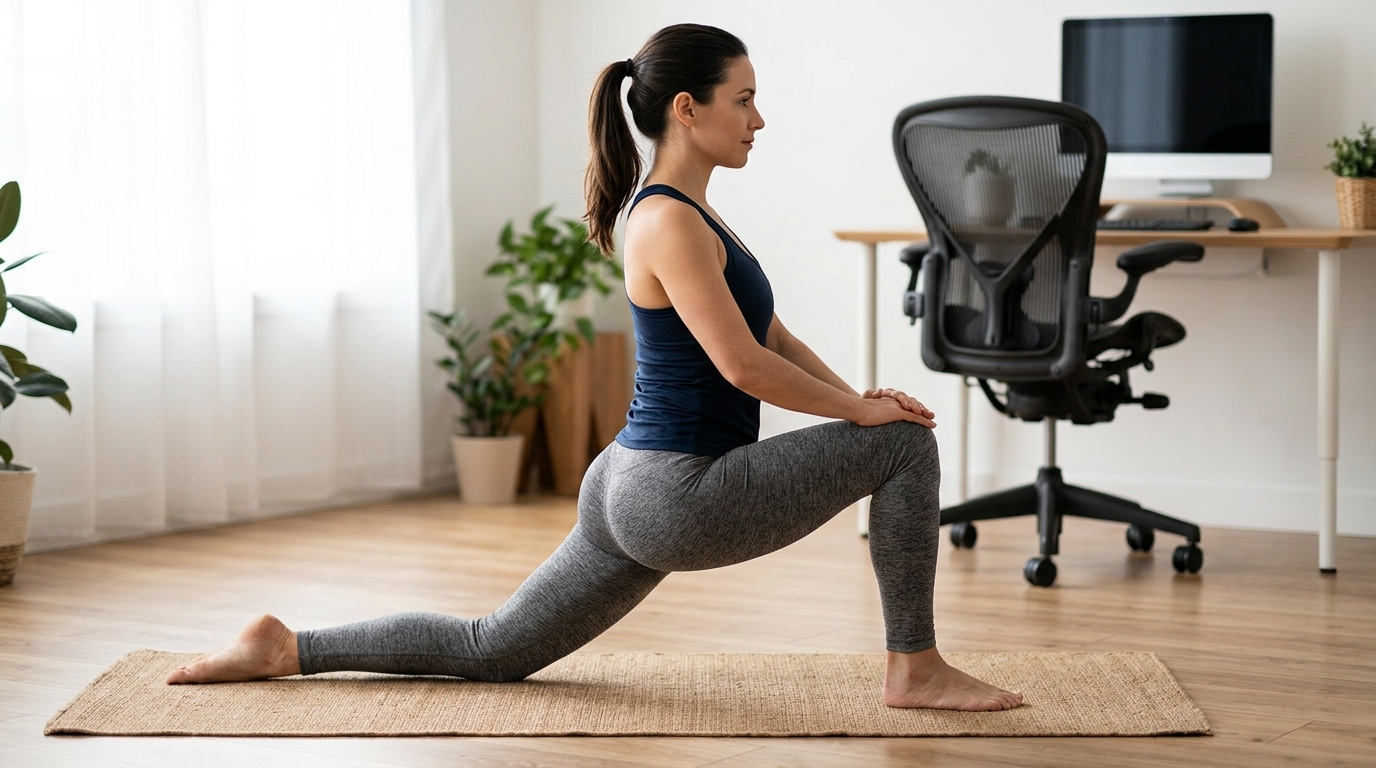
When performed on the floor, a low lunge may efficiently target the psoas while also limiting tension on the tissues that are around it. Assuming a kneeling posture, one leg is brought forward while the hips are brought forward in a gentle manner. Instead of arching the lower back excessively, the focus should continue to be on keeping a neutral spine while doing the exercise. Because of this position, the stretch is able to concentrate farther and more directly on the hip flexor area. It is possible for even minute alterations to the location of the pelvis to have a major impact on the efficiency of the action. By creating a mild feeling along the front of the hip and upper thigh, the stretch, when performed properly, helps offset the effects of sitting for an extended period of time, which may shorten the thighs.
The Mobility Sequence for the Reclined Figure-Four Position
A reclining figure-four posture might indirectly enhance psoas mobility by increasing total hip function. This is despite the fact that the gluteal muscles are often connected with this position. The hip joint has an opening effect when the individual is lying on their back with one ankle resting on the knee of the opposing leg. When the mobility of the muscles around the pelvis improves, the compensatory tension that is present throughout the pelvis often lessens. Due to the fact that the psoas seldom functions in isolation, this balanced approach is very crucial. Both the efficiency with which the hip moves and the amount of stress that is exerted on deeper structures may be affected by restrictions in the tissues that are next to the hip. Integration of supporting mobility work contributes to the creation of changes that are more thorough.
Methods of Breathing to Improve the Release of the Psoas Muscles
This is especially true when addressing deep muscles like the psoas, as breathing plays a crucial influence in the efficiency of stretching. Breathing through the diaphragm at a slow pace helps to calm the neurological system and decreases excessive tension in the muscles. As a result of the significant anatomical connections that exist between the diaphragm and the psoas, breathing patterns have the potential to directly alter how the muscle reacts to stretching. While stretching, many people may not realize that they are holding their breath or breathing shallowly, which reduces the potential advantages of stretching. This helps to generate a more relaxed environment inside the body, which in turn enables deeper tissues to release gradually and spontaneously over time. Focusing on lengthy, controlled exhalations is one way to do this.
Incorporating Physical Activity Into the Working Day
Although stretching is beneficial, maintaining a regular movement pattern throughout the day is necessary in order to avoid excessive psoas shortening. It is helpful to break lengthy periods of hip flexion by standing occasionally, walking short distances, and changing postures often. In order to lessen the cumulative effects of sitting and to foster healthy muscular function, even short mobility intervals may be very effective. By combining floor stretches with regular movement throughout the day, you may establish a plan that is more successful than depending just on stretching. The objective is not only to temporarily extend the psoas muscle, but also to encourage natural movement patterns that sustain flexibility and mobility during the activities of everyday life.
Keeping your Psoas mobility in good shape has long-term benefits.
Having a psoas that is both healthy and mobile may help improve posture, make movement more efficient, minimize pressure on the lower back, and generally make everyday tasks more comfortable. The need of paying proactive attention to the health of the hip flexors is growing as sitting continues to be the predominant sitting position in contemporary work settings. Floor-based stretching practices provide a straightforward and easily accessible method to offset the potentially compressive consequences of sitting for extended periods of time, while simultaneously fostering improved movement quality. In conjunction with regular physical exercise and attentive posture practices, these stretches have the potential to assist in reestablishing the body’s equilibrium and alleviating a significant number of the discomforts that are connected with inactive lives. Consistent treatment for the psoas not only promotes hip mobility but also contributes to the long-term health of the musculoskeletal system and the well-being of the functional system.