Managing Grip Fatigue Limits During Heavy Pulling Movements and Back Exercises
Managing Grip Fatigue Limits During Heavy Pulling Movements and Back Exercises
Grip fatigue is a major limiting factor in heavy pulling actions, like deadlifts, barbell rows, pull-ups, and other back workouts that need prolonged hand strength. A lot of lifters find themselves in circumstances where their hands start to open or their forearms start to tire before their back muscles get to the amount of exertion that they want. This constraint may negatively impact training quality, limit the amount of resistance employed, and make it hard to sustain consistent performance over several sets. Grip endurance, forearm strength, pulling mechanics, and general exhaustion are all interrelated, and understanding these concepts is important if you want to build an efficient strength training program. varied exercises also exert varied demands on the fingers, wrists and forearm muscles thus one grip approach may not function equally well for each activity. Training volume, rest intervals, equipment selection, and exercise order also affect the rate of development of grip fatigue. The key sources of grip limits can be identified, and targeted programming modifications can be made to improve pulling performance without sacrificing back development.
Why Heavy Pulling Performance is Limited by Grip Fatigue
Grip fatigue occurs when the muscles that close the hand are not able to sustain the force necessary to finish an exercise or training session. The finger flexors, wrist stabilizers and surrounding forearm muscles engage constantly in strong pulling motions to maintain the hands firmly linked to the bar . As repetitions increase, local muscular tiredness may diminish the ability to maintain enough gripping force, although the larger muscles of the back and hips may still be able to generate more force . You’ll notice this difference especially on deadlifts, Romanian deadlifts, bent-over rows, and long sets of pull-ups. Grip endurance and maximal grip strength are linked but separate traits so a lifter who can hold a big weight for a short time may nevertheless suffer throughout long sets. The grip’s hardness is also affected by bar diameter, surface roughness, dampness and where you put your hand. Understanding these variables allows us to evaluate if performance is hampered by lack of hand strength, bad technique, too much volume, or a poor equipment setup.
How to Tell the Difference Between Grip Strength and Grip Endurance
Grip strength is the highest amount of force that an individual can generate with their hands . Grip endurance is the ability to consistently generate or maintain grip force over time . Both are demanding qualities to pull off, but they react differently to training. A lifter with great maximal grip strength can hold a heavy deadlift successfully for a few seconds, but lose control in a protracted set of barbell rows. In contrast, someone with great endurance may be able to perform high rep pulling exercises with ease but be unable to lock in an extremely heavy barbell. By testing performance in various rep ranges, you may figure out which quality needs the most work. Short, heavy holds provide information on force capability, while intermediate load holds and repeated carry show sustained grasping ability. These tests should however be completed with safe resistance and without pushing beyond pain or numbness. The training should be specific to the limitation that has been discovered, not random forearm exercises. Usually, building both strength and endurance provides a more complete basis for consistent performance during arduous back training.
How to Improve Your Grip Technique in Heavy Compound Lifts
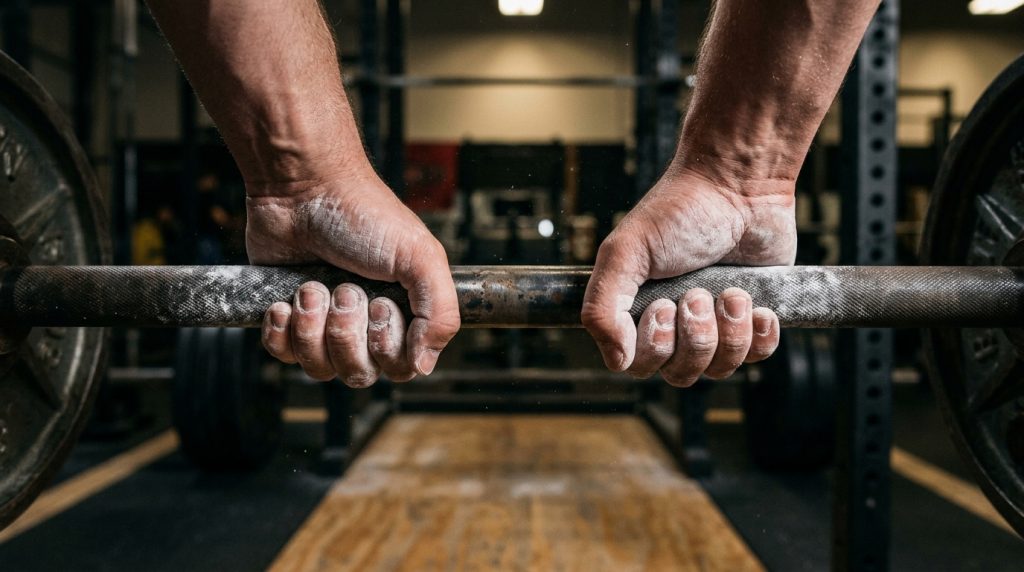
A good grip will help you better control the bar on powerful pulls and will also help avoid unneeded fatigue in the hands. Your fingers should wrap tightly around the barbell with the thumb placement dictated by the grip type you choose. A good hand position is stable, so the pressure is distributed and it doesn’t have to be constantly adjusted during a set. For deadlifts and rows, the wrists should normally remain in line with the forearms, rather than flexing too much under the load. Excessive wrist flexion or extension might decrease the effectiveness of the grip and cause discomfort. The bar must sit securely in the hand and not roll toward the fingers where the leverage may be greater on the finger flexors. Chalk helps with friction, if the bar starts to slip in moist palms, but it will not fix a lack of strength or bad technique. Lifters should not grip the bar any tighter than necessary for warm-up sets, as well. Repeatable set-up allows the hands to work efficiently while the attention is directed to the desired pulling movement.
Programming Grip Specific Training Without Overtraining
Direct grip work can help performance but needs to be balanced with the demands of regular back exercise. Adding a lot of forearm work after every pull session may raise fatigue, without enough recovery for effective adaptation. Two short sessions each week focusing on grip is a good start, with one or two exercises for a reasonable amount of sets. “Farmer’s carries, dead hangs, hefty static holds, and controlled wrist or finger workouts can all be used to address different areas of grip performance,” she says. The Farmer’s carry challenge was sustained gripping, requiring the lifter to stabilize the trunk and maintain posture during movement. Dead hangs are about the ability to hold your body weight with your hands, however not everyone can do this (those with certain shoulder or hand issues). You can get a customized stimulus for deadlift grip strength by controlling the load on static barbell grips. Athletes should start with a resistance they can hold on to safely, without too much shaking or their technique falling apart. Grip work can then be progressed slowly according to performance, recovery and the needs of the main training program .
Selecting the Appropriate Grip for Different Pulling Movements
Grip choice may affect workout performance and patterning of muscle demands during heavy pulling. A double-overhand grip is a good starting grip for deadlifts, because it builds symmetrical hand strength, and avoids some of the complexities of alternate grips. However maximal loads could go higher than what this position can hold especially for lifters who have developed their back and hip strength more than their grip. A mixed grip (one hand facing forward and the other backward) can help increase bar security for big deadlifts. The supinated arm requires special consideration for posture. Lifters should also never try to curl the bar with the supinated arm as this can increase stress on the biceps tendon. Another technique employed in strength sports is the hook grip where the thumb is trapped under the fingers. This may cause discomfort at first and you need to build up to it. Some people may feel more comfortable with a neutral grip or pronated grip for pull-ups and rows depending on anatomy and equipment. Choose your grip for a secure handle, good placement of the joints and consistency, rather than one guideline to rule them all.
Using Lifting Straps to Overcome Grip Weakness
Prevent grip fatigue from restricting activities that primarily target the back or posterior chain using lifting straps. These devices attach each hand to the bar, minimizing the constant gripping power required to keep control . This is particularly helpful for heavy Romanian deadlifts, high-volume rows, and other pulling exercises when your hands grow tired before your target muscles have had enough work. But straps should assist grip development, not replace it altogether. A good program can incorporate unassisted warm-up sets, specific grip practice, and straps on chosen working sets when hand strength is not the main training target. This method allows lifters to efficiently exercise their back and train their natural grip capacity simultaneously. Beginners should focus on good bar control and how to release or safely get out of equipment before using straps. Straps should be tight and inspected for damage prior to usage. They are also less appropriate when the primary aim is to measure maximum unsupported grip strength as they vary the job.
Order of Exercises, Rest Periods, and Training Volume
How the order exercises are done can have a huge impact on grip performance the entire workout. Heavy deadlifts, loaded carries and difficult rows back-to-back might wear out the forearms before it is time for other exercises. If grip fatigue is always the limiting factor in back growth, then scheduling the most important pulling exercise earlier in the program can assist maintain performance. But rest times are important too, as the forearm muscles need time to recuperate between tough sets. Heavy compound pulls could use roughly 2-5 minutes break depending on effort, number of reps, and individual conditioning. Lighter accessory work could allow for shorter intervals, but rushing repeated heavy sets can compromise grip security and the quality of the entire movement. And consider the total weekly pulling volume if you are continuing to get forearm fatigue over numerous sessions. Too many sets, training to failure too often, and too many grip-intensive activities at once can build up a backlog of fatigue that the athlete cannot recover from. If you can reduce the amount of accessory work that is not essential or split up your tough pulling workouts, you might be able to return to normal performance without adding another grip workout. Good programming requires a balance of productive labor and enough recovery to enable solid technique and continuous training advancement.
Monitoring Grip Fatigue and Safe Advancement of Training
Monitoring grip performance will distinguish between typical muscular exhaustion and a chronic deficit that demands a change in training approach. Lifters are able to log working weights, reps, grip technique, rest periods and when their hands begin to slip. The current strategy is likely to be developing meaningful adaptations if the same weight is progressively easier to hold as back exercise performance increases. However, one should not discount frequent bar slippage, rapid loss of strength of grip or difficulty to maintain regular hand function. “Pain, tingling, numbness, or odd weakness could be an indicator of an issue that needs professional evaluation, rather than more training volume.” Grip training should be progressive, with tiny, achievable increments in resistance, hold time or total repetitions. When all three variables are increased concurrently, it can be difficult to determine what is causing the extreme exhaustion. Athletes should also avoid doing maximal grip tests when their forearms are already fatigued from hard tugging. Regular monitoring enables evidence-based modifications and prevents needless slippages. By carefully managing grip limits, lifters can enhance their hand strength, keep a solid hold on heavy equipment, and get more consistent results from their back training regimens.